
Family-owned · Central Coast Local
4.9 from 69 Google reviewsWhat Are Weep Holes?
Small openings in your window frame do a big job. Here's what they are and why they matter.
Call or text (805) 430-6304Request an estimate
Tell us what you need
How Window Weep Holes Protect Your Home
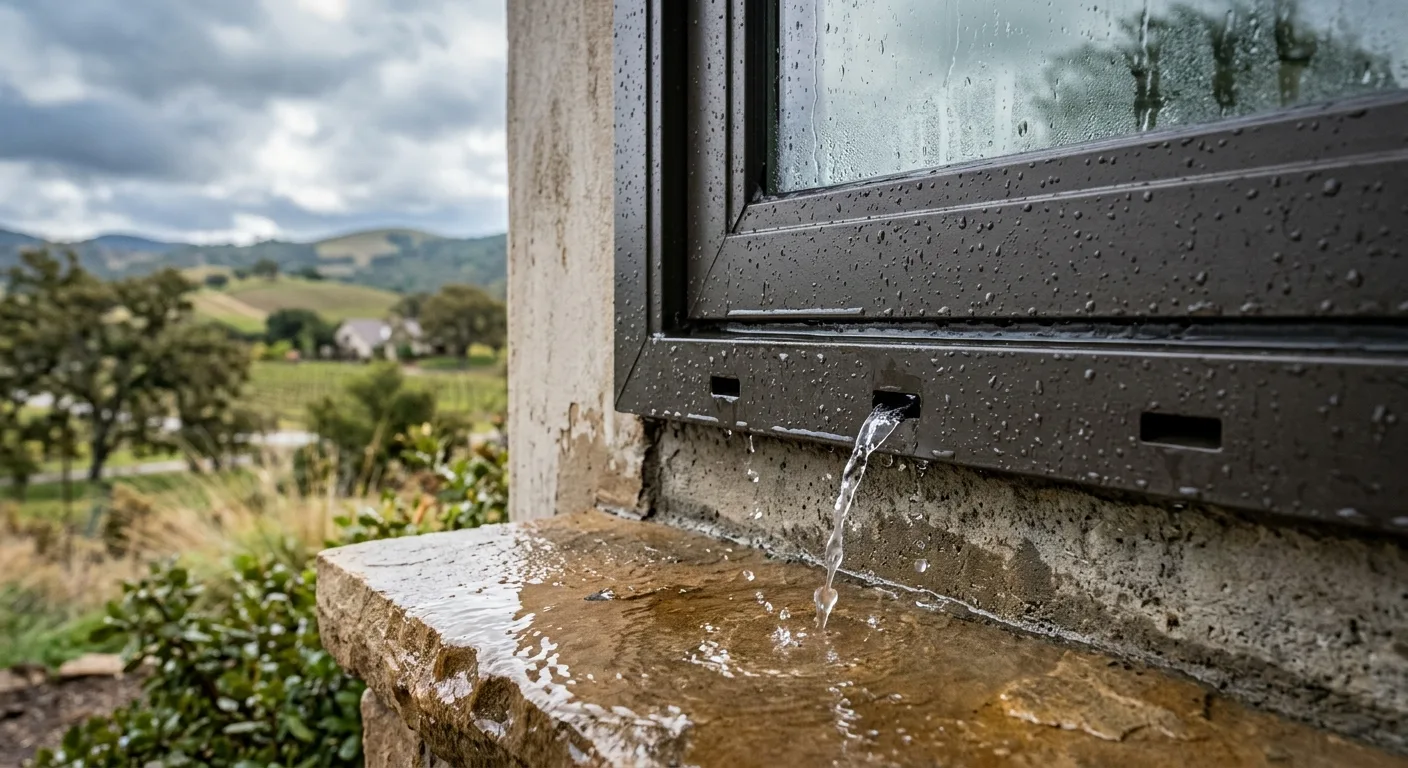
Window weep holes are small openings at the bottom of a window frame, typically slotted or round, that let rainwater and condensation drain out before it has a chance to pool. They're a standard feature on windows made from vinyl, aluminum, steel, and fiberglass. Wood windows generally don't have them because solid wood doesn't form the internal chambers where moisture tends to collect in other frame types.
Most homeowners never notice weep holes until something goes wrong. If you're seeing water stains on your sill, soft spots in your drywall near a window, or a musty smell that follows a rainstorm, a blocked weep hole is one of the first things worth checking. On California's Central Coast, where coastal fog, marine layer, and seasonal rain can push a surprising amount of moisture into window frames, keeping these small openings clear is a simple form of maintenance that prevents expensive repairs down the road. If you're thinking about window replacement, understanding how your new windows manage drainage is worth knowing before you decide.
Why Weep Holes Are Necessary
Size & Placement
Getting Weep Hole Size and Location Right
Size Matters
Too small and the hole restricts drainage during heavy rain, letting water back up inside the frame. Too large and wind-driven rain can enter through the opening itself, pushing water in rather than letting it out.
Placement
Weep holes sit at the bottom of the outer frame, aligned with the internal drainage channels built into the sill. Moving them higher or placing them off-channel defeats the gravity-fed drainage they rely on.
Visibility Varies
Most weep holes are visible on the face of the frame, look along the bottom rail. Some manufacturers recess or cover them with small baffles for appearance, which is fine as long as the baffle allows water through and can be accessed for cleaning.
Know Where Yours Are
Before any maintenance or cleaning around your windows, locate the weep holes on each unit. A vacuum attachment or a thin wire can clear debris from a slot without damaging the frame or its seals.
Maintenance
Keeping Weep Holes Clear
Inspect Twice a Year
Check weep holes in fall before the rainy season and again in spring. Look for dirt, spider webs, paint overspray, or compacted debris blocking the opening.
Clear Gently
A thin wire, a straightened paperclip, or a can of compressed air clears most blockages without scratching the frame. Avoid power washing directly at the weep holes, high pressure can force water past seals into the wall.
Test the Drainage
After clearing, pour a small cup of water along the interior sill track and watch for it to exit at the weep holes within a few seconds. If it doesn't drain freely, the internal channel may be blocked and worth a closer look.
When Weep Holes Aren't Enough

Questions About Your Windows?
Buster and Aaron have been working on window installations across Ventura, Santa Barbara, and San Luis Obispo Counties for over 35 years. If you're not sure whether a drainage issue is a maintenance fix or a sign it's time to replace, call and describe what you're seeing, (805) 430-6304.
Related
Next step
Tell us about the job
Your name, your number and what needs doing. A person from Mountain View Windows gets back to you.
Rather talk now?(805) 430-6304